


One paid tier of Kupid AI is described in a review dated 14 May 2026 as unlimited text messaging plus around 140 coins a month for images. That is the headline. The detail that matters sits underneath it: what a coin buys, when it runs out, and what you pay in pounds once month one is over.
Genoteerd is not the word here, so let us use the house one. Noted. Everything below separates what is confirmed from what the provider claims, because a credit system without clear terms is a system you should not fund.
What a Kupid AI token actually is
The platform does not sell one single currency called a token. Based on the review coverage in the search results, text chat is handled by the subscription (unlimited at the tier described), while images draw on a monthly coin allowance. Voice messages are metered in minutes, and some tiers add a small video allowance on top.
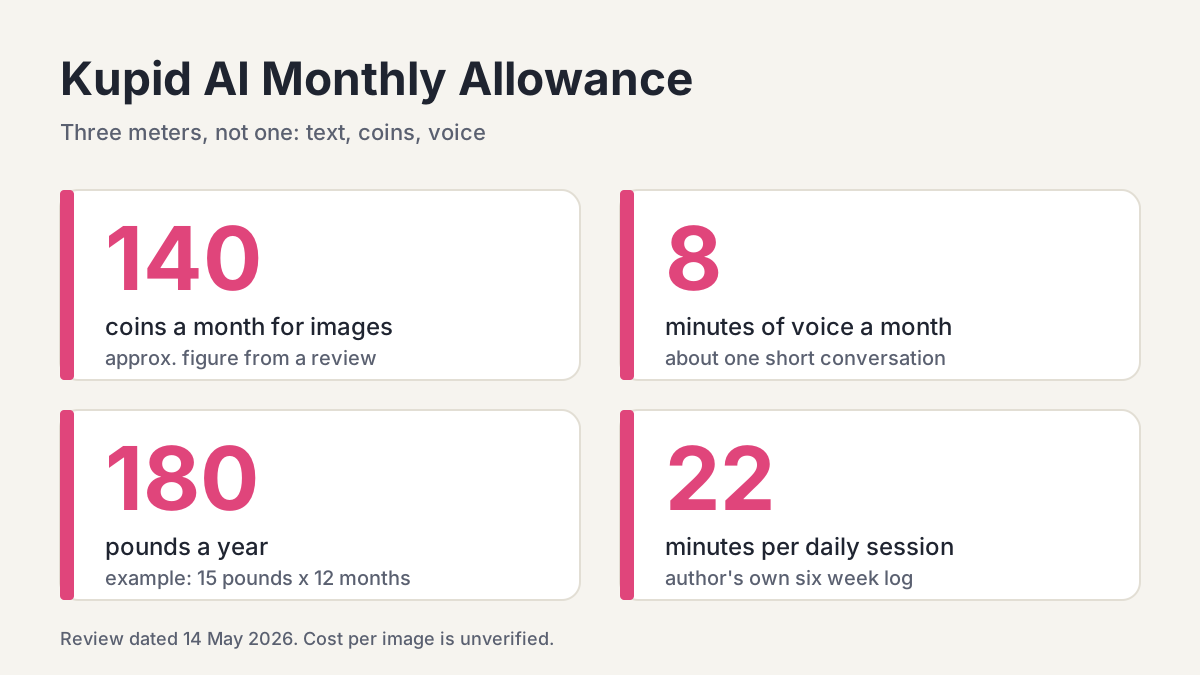
So the practical picture is three meters, not one. Text is flat. Images cost coins. Voice costs minutes. If you only ever type, coins barely matter. If you generate pictures, the 140-coin figure becomes the number that decides whether your tier is enough.
Unverified: the exact coin cost per image. The review snippet gives the monthly allowance, not a per-image price, and I could not confirm the conversion from any first-party page. Write that down before you assume 140 coins means 140 pictures.
How the subscription and coin allowance fit together
The subscription is the base layer. It unlocks the unlimited text and sets the size of your monthly allowance. Coins sit on top of it. In the tier covered by the May 2026 review, the allowance is around 140 coins a month, 8 minutes of voice and a limited video quota.

What I cannot tell you from the evidence is whether unused coins roll over. Many credit systems reset monthly. Others let a balance expire after a fixed period of inactivity. Per the terms is where this gets settled, and the terms are on the operator's site, not in a review. If rollover matters to you, find that clause first.
Also unverified: whether you can top up with a one-off coin pack without changing tier. Some platforms sell packs. Some force an upgrade. I have not seen a first-party source that settles it for Kupid AI, so treat any claim either way as unconfirmed.
What it costs after month one
I will not invent a price. The sources available to me describe the allowance but not a pound figure, and prices on subscription apps change often. What I can give you is the method.
Take the monthly price on the checkout page and multiply by twelve. A tier shown at 15 pounds a month is 180 pounds a year. Then check three things: whether the first month is discounted, whether the price rises at renewal, and whether VAT and any app-store markup are included. Introductory offers are common, and the renewal price is the one that counts.
That is not a scandal. It is arithmetic, and it is the arithmetic that most people skip. Write the annual figure down before you enter card details, then decide whether 140 coins and 8 minutes of voice are worth it to you.
A note on how long you really spend
I once kept a log for six weeks of my time in a single companion app, mostly on the train from Manchester to London. The average session ran about twenty-two minutes, which matched the engagement prompts the app sent me every day. The app only paused its push notifications after I changed my phone settings, not through its own menu. Noted.
Why does that belong in an article about tokens? Because usage-based credits and daily nudges work together. If an app prompts you daily and meters images or voice, spending creeps. Check your device-level notification controls before you assume the app will respect your limits, and look at your coin balance weekly, not monthly.
The terms that decide whether this is safe to pay for
Credits are money, so the policy around them matters more than the marketing. Read the policy first. Four clauses are worth finding: refunds on unused coins, expiry of coins, cancellation and how to stop renewal, and data retention.
On data retention, the general pattern in this category is that chat logs and image prompts are stored for some period, sometimes beyond account deletion. I cannot confirm Kupid AI's exact retention window, so treat it as unverified until you have read it yourself. Pippin Club and the other reviews describe the product, not the legal text.
One of the search results frames the safety question sensibly: an AI companion is generated software, not a confidential human relationship. That is a fair rule for what you type into it. Do not share anything you would not want stored.
What could be better
The weak points are practical. First, the allowance is opaque: around 140 coins a month is a figure from a review, and without a published cost per image you cannot plan your usage. Second, voice is thin. Eight minutes a month is roughly one short conversation, which will feel tight if voice is your main reason to subscribe.
Third, the pricing path is hard to see before you commit. A tier you cannot price at renewal is a tier you should approach carefully. Skip the annual plan until you have lived through one monthly cycle and checked what the second charge looks like.
Who the coin system suits
It suits people who mostly type. Unlimited text means the meter barely runs for them. It suits a light image user too, as long as a monthly allowance of around 140 coins covers a handful of pictures.
It suits heavy voice and video users least. Those are the metered resources, and they are the ones that run out first. If that is you, confirm the minute allowance on your tier and ask whether extra can be bought before you pay.
For comparison, if you want to see how a different companion platform handles its credits, Janitor AI is another option in the same category. Compare the terms side by side, not the marketing.
A short checklist before you pay
Open the price page and note the monthly cost and the renewal cost. Find the line on coin expiry. Find the cancellation steps and the refund wording. Check the age limit and the data retention clause. Then set a calendar reminder a few days before renewal.
Do it on the record, in a note on your phone, with dates. If a charge looks wrong later, a dated note beats memory. And if any of those four clauses is missing or vague, that is your answer about whether to trust the app with a card.
Comments
No comments yet.
Leave a comment
Your email will not be shown. Comments are reviewed before they appear.