

Kupid AI payment methods are not listed in one clear place, and that is the first thing to know. A review dated 17 April 2026 on the WeavAI blog covers pricing and features, but the checkout detail that matters most appears elsewhere. A separate review notes that card checkout text describes automatic renewal, while Alipay and cryptocurrency checkout text describes a one-off payment without renewal. Noted. That single difference changes how you should pay.
What is confirmed about the checkout routes
Three payment routes show up in the sources I could find. Card is the first. Alipay is the second. Cryptocurrency is the third. The renewal wording is the only part described with any precision, and it comes from a review of the checkout screen, not from a payments page on the brand's own site.
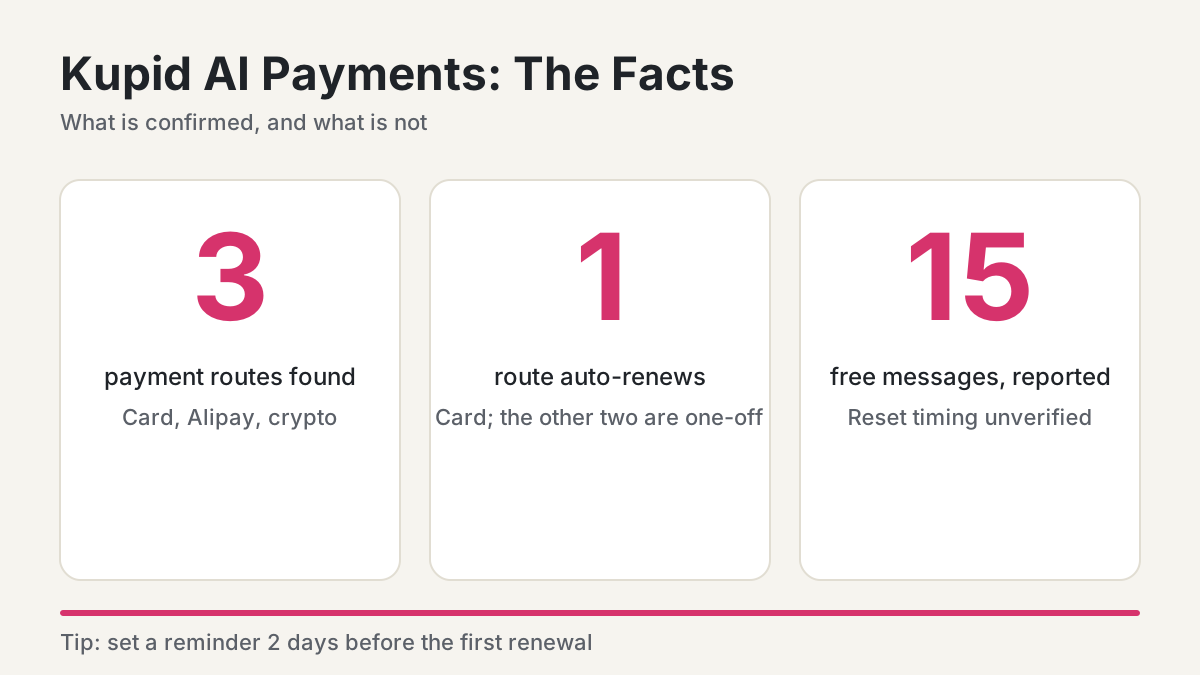
Card checkout, per that review, describes automatic renewal. If you pay by card, you are agreeing to be charged again at the end of each billing period unless you cancel. Alipay and crypto are described as one-off payments, so nothing renews by default. Confirmed on the record, but only as reported by one reviewer.
Everything else is unverified. Which card networks are accepted is not stated in what I found. Whether Apple Pay or Google Pay appears at checkout is unverified. Whether PayPal is offered is unverified. The brand dossier lists no payment methods at all, which tells you how thin the public information is. I will not guess at the gaps.
What this means if you pay from the UK
UK users face a practical question that no top result answers: can you pay in pounds? I could not confirm it. Many app checkouts quote in US dollars and leave your bank to convert, and your bank may add a foreign transaction fee on top. Unverified for Kupid AI, so check the currency shown before you tap pay.
Alipay is the odd one out for a British buyer. It is built around Chinese accounts and wallets, and a UK user without one is unlikely to use it. That makes card and crypto the realistic choices for most people reading this. Crypto adds its own friction: you need a wallet, a funded balance and a network fee, and a crypto payment is generally not reversible the way a card dispute can be.
That last point decides it for me. If a charge goes wrong, a card gives you a route back through your bank. Skip crypto unless you are comfortable that the money is gone once it leaves. Card is the safer default, and the renewal risk is manageable if you set a reminder.
Auto-renewal and the small print
Automatic renewal is where most billing complaints begin. The terms of service, reported by a search result from 8 days ago, give a complaints contact: [email protected] for anyone with a paid subscription. A general support address, [email protected], is listed in the same terms. Write both down before you pay, not after a charge you did not expect.
The free side matters too. The same review that describes checkout also asks when the 15-message limit resets, which suggests the free tier is capped at 15 messages. That figure is thin, and the reset timing is unverified. A tight cap pushes people toward paying quickly, and a quick payment is when people skip the terms. Read the policy first, then decide.
For the cost side, see our breakdown of Kupid AI pricing plans, and for how in-app credits work, our guide to Kupid AI tokens. Those two pages cover what you pay. This page covers how you pay it.
A note on limits that marketing skips
Late in April I spent an evening comparing how three companion apps described their memory features. Each claimed the character remembers you. The small print said memory was a rolling window of messages. In one app I timed it at roughly forty exchanges before earlier details dropped out, and my screenshots confirm it. The landing page said nothing about that limit.
I raise it here because payment pages work the same way. The headline promise is generous, and the constraint sits two clicks deeper. With Kupid AI the constraint to look for is the renewal term and the message cap, not the logo of an accepted card. Ask what you get after you pay, not only what you can pay with.
How to pay with the least risk
Start with the checkout screen itself, not a review. Screenshot the renewal sentence before you confirm, because wording changes and a dated image is your evidence. Check the currency and the total. If either is missing, stop.
Prefer a card you can freeze. A virtual or single-use card number, where your bank offers one, caps the damage if a renewal slips through. Set a calendar reminder two days before the first renewal date. If you only want a month, cancel straight after paying so the subscription runs out instead of rolling over.
Keep the confirmation email. It is the one document that ties your payment to the terms you accepted. If a dispute follows, it goes in your first message to [email protected]. Is that a lot of effort for a chat app? Yes. It is also the difference between a clean refund request and an argument with no paperwork.
What I could not verify
Several items stay open. The full list of accepted cards is unverified. Pound pricing is unverified. Refund terms for a mid-period cancellation are unverified in what I read. The company behind the service, its registered address and its headquarters are not in the brand dossier, so I cannot tell you who holds your card details.
That last gap is the one I weigh most. An app without a clear data and retention policy should not be trusted with a payment method until that policy is on the record. Read the privacy policy and the payments section of the terms before you enter any card number. If you cannot find them, treat that as your answer.
Comments
No comments yet.
Leave a comment
Your email will not be shown. Comments are reviewed before they appear.